

Introduction:
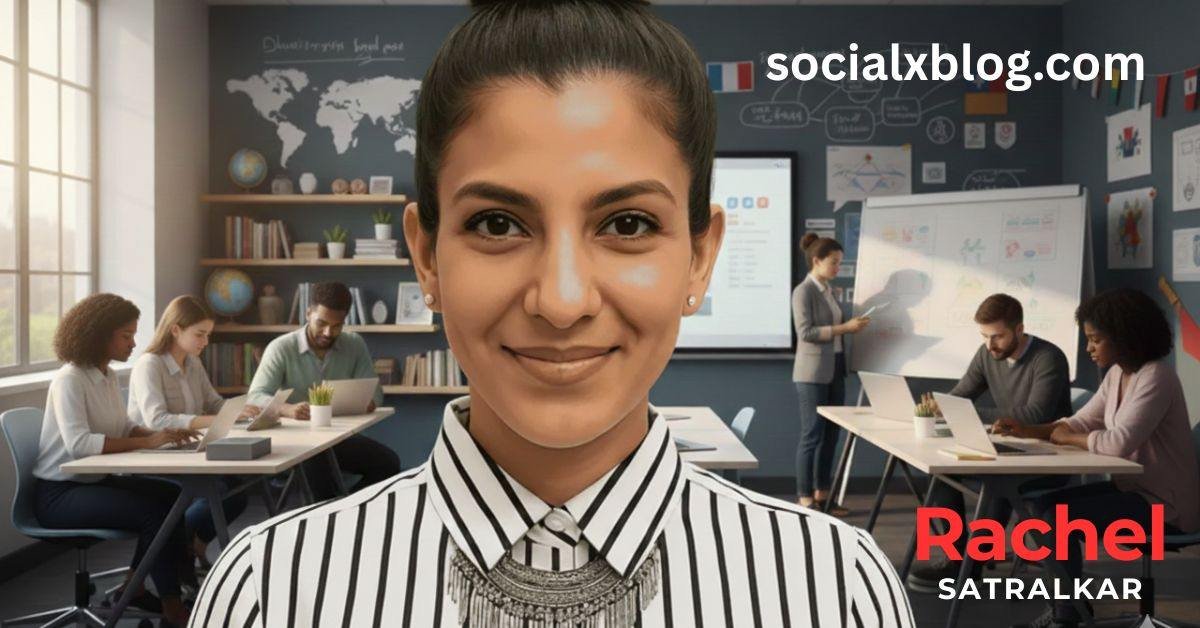
Rachel Satralkar: In an ever-evolving educational landscape, leaders who combine academic philosophy, progressive thinking, and practical implementation are rare. She stands tall among them—an education visionary renowned for her transformative contributions to the International Baccalaureate (IB) framework and her dynamic leadership at XCL World Academy in Singapore. With over 12 years of experience focused on the IB Middle Years Programme (MYP) and learning and curriculum development, Rachel’s influence reaches from the classroom to educational policy boards, shaping young minds and nurturing future-ready global citizens.
Educational systems across the world are adapting to the 21st century’s demands, emphasizing critical thinking, collaboration, and creativity. Her methodologies address these needs head-on. Her role as a curriculum architect refines how students learn and reshapes how educators teach. For educators, parents, and education policymakers—especially those in the USA looking to understand successful IB implementations worldwide—Rachel’s work offers a playbook for impact-driven outcomes.
Rachel Satralkar’s Professional Journey
Her foray into international education began more than a decade ago, with a focused passion for student-centered learning within the globally recognized IB framework. Holding multiple certifications and degrees in international education development and curriculum studies, she has served in leadership roles across continents.
Her career milestones include:
- I have over 12 years of IB experience, which includes MYP and leadership roles in curriculum development.
- Rachel has had a major impact on the learning and development strategies of international schools.
- In her current leadership role at XCL World Academy, she is actively shaping the academic fabric of the institution.
In all her roles, Rachel has advocated for a holistic approach to education—one that empowers learners beyond test scores.
What Defines the IB Middle Years Programme (MYP)?
To understand Rachel Satralkar’s expertise, it’s crucial to explore the IB MYP, an educational framework designed for students aged 11 to 16.
Key Features of the IB MYP:
| Feature | Description |
| Interdisciplinary Learning | Fosters connections between subjects to solve real-world problems. |
| Global Contexts | Learning through a global lens to develop international-mindedness. |
| Concept-based Curriculum | Moves beyond facts to explore ideas, enabling more profound understanding. |
| Approaches to Learning | The approach focuses on developing skills such as research, thinking, and communication. |
Rachel has mastered aligning these MYP pillars with culturally responsive pedagogy, a necessity in diverse international school systems.
Her Role at XCL World Academy, Singapore
As an influential leader at XCL World Academy, Singapore—a front-runner in delivering world-class IB programs—Rachel Satralkar’s responsibilities go beyond curriculum design. She fosters institutional growth through:
- Curriculum leadership grounded in IB philosophies.
- Facilitating interdisciplinary planning across departments.
- Conducting teacher evaluations and coaching for better instructional quality.
- Spearheading project-based learning tied to United Nations Sustainable Development Goals (SDGs).
Did You Know?
Under Rachel’s leadership, XCL World Academy integrated SDG-focused modules, enabling students to take real-world action through learning.
Rachel Satralkar’s Vision for Modern Education
Rachel’s teaching philosophy is based on a central premise: learning should empower students. Her work exemplifies
- Equitable access to learning opportunities.
- Prioritization of learner agency via student-led initiatives.
- Inclusion of reflective practice across both student and teacher communities.
By integrating global frameworks with region-specific needs, Rachel ensures that education is both localized and international in scope.
Curriculum Design Strategies That Set Her Apart
A hallmark of Rachel Satralkar’s approach is adaptive curriculum design. In traditional settings, curriculum can remain static; Rachel, however, builds it as a living document—changing, evolving, and responding.
Core Tenets of Her Approach:
- Backward Design: Start with an assessment of what success looks like, then plan accordingly.
- Student Voice Integration: Uses feedback loops directly from student experiences.
- Inquiry-Based Learning: Encourages curiosity and self-directed discovery.
Sample Breakdown: Inquiry vs Traditional Models
| Element | Traditional Education | Rachel Satralkar’s Curriculum Model |
| Learning Method | Teacher-directed | Student-centered, inquiry-driven |
| Assessment Approach | Standardized testing | Formative, reflective assessments |
| Lesson Planning | Textbook-aligned | Concept- and context-driven |
Elevating Teacher Training and Professional Development
One underserved area in schools globally is teacher empowerment. Rachel has tackled this head-on by designing sustainable, scalable teacher training models.
Her programs include:
- Micro-credentialing and upskilling modules.
- She also offers peer-to-peer coaching systems.
- She provides in-house learning hubs that blend physical and digital resources.
- The system integrates reflective tools specifically designed to meet IB standards.
Rachel sees teachers as constant learners, not just facilitators of content, and her model embraces lifelong learning as a pillar of educational excellence.
Thought Leadership in Global Education Circles
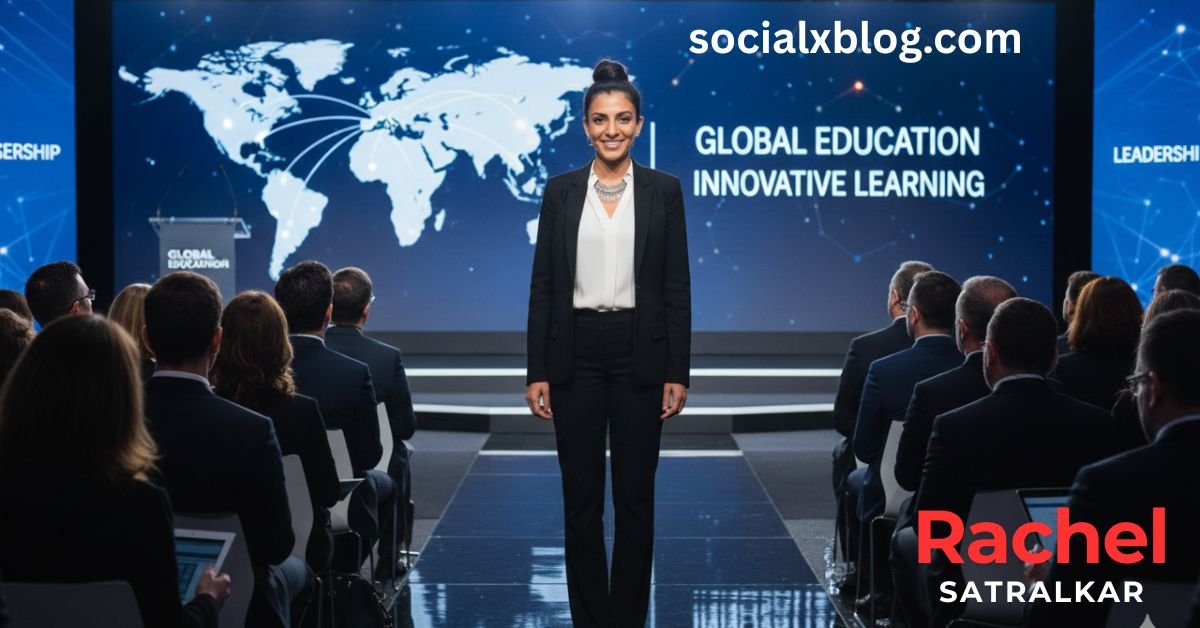
Beyond schools, Rachel influences global dialogue on education innovation. She frequently participates in:
- IB Global Conferences representing Southeast Asia.
- Regional workshops as a keynote specialist.
- Published papers in pedagogy journals (e.g., Journal of International Curriculum & Pedagogy).
Areas of Ongoing Research:
- Emotional safety in curriculum design
- Impact of interdisciplinary units on cognitive flexibility
- Student well-being in high-performance academic systems
Industry Praise:
“Rachel’s work is not just academic—it’s deeply human.” – Dr. Lina Bhatia, UNESCO Consultant, 2025
Integrating Technology for Future-Ready Classrooms
Digital tools are no longer optional—they are essential. Rachel Satralkar’s strategic integration of edtech platforms like ManageBac, Seesaw, and Microsoft Teams enables a seamless blend of learning modalities.
She emphasizes:
- Tech-infused lesson plans, including coding, AI, and digital storytelling.
- Safeguards around digital citizenship and online learning ethics.
- Data analytics from student portfolios provide personalized learning pathways.
How Rachel Satralkar’s Approach Benefits U.S. Educators
For American educators exploring IB programs or progressive curriculum redesign, Rachel’s methodology offers replicable models focused on:
- Her methodology focuses on competency-based learning that aligns with global standards.
- Authentic, portfolio-based assessments.
- Mental wellness is layered with academic progression.
Her philosophy aligns with U.S. priorities like SEL (Social-Emotional Learning), Project-Based Learning (PBL), and equity-focused reform—making her strategies valuable learning maps for U.S. school systems pursuing innovation.
Awards, Recognition & The Road Ahead
Her expertise hasn’t gone unnoticed. She has earned:
- Top Contributor Award, IB Asia-Pacific (2023)
- Named among “Top 10 Global Curriculum Designers” by TeachTheFuture.org (2024)
- Featured in Educational Leadership Journal, 2025 Edition
Looking ahead, Rachel is exploring opportunities in global educational consulting, helping systems scale hybrid curricula across geographies, from Asia to North America.
Data Visualization:
| Area of Contribution | Impact Level (Scale of 1-10) |
| Curriculum Innovation | 10 |
| Teacher Development | 9 |
| EdTech Integration | 8.5 |
| Institutional Leadership | 9.5 |
| Global Educational Advocacy | 8 |
FAQs
What is Rachel Satralkar known for?
She is widely recognized for her pioneering work in IB education, MYP curriculum design, and global teacher development.
Where is Rachel Satralkar currently based?
Rachel currently serves at XCL World Academy in Singapore.
How can U.S. educators benefit from her approach?
Her strategies around student agency, curriculum design, and digital integration are highly applicable to U.S. schools.
Does she work with U.S.-based institutions?
Yes, she collaborates globally, including offering consultancy and workshops for U.S. schools.
Is Rachel Satralkar active in thought leadership circles?
Absolutely. She speaks at international conferences and contributes to educational journals.
Conclusion:
Rachel Satralkar embodies what 21st-century education demands—vision, adaptability, and purpose. Her work, centered on the IB MYP and global educational reform, speaks to the needs of educators, students, and institutions alike. More than a curriculum designer—she’s a transformer of learning cultures.
For U.S.-based educational leaders seeking inspiration or innovation, Rachel’s journey offers actionable frameworks, tested strategies, and a learner-first ethos.


